

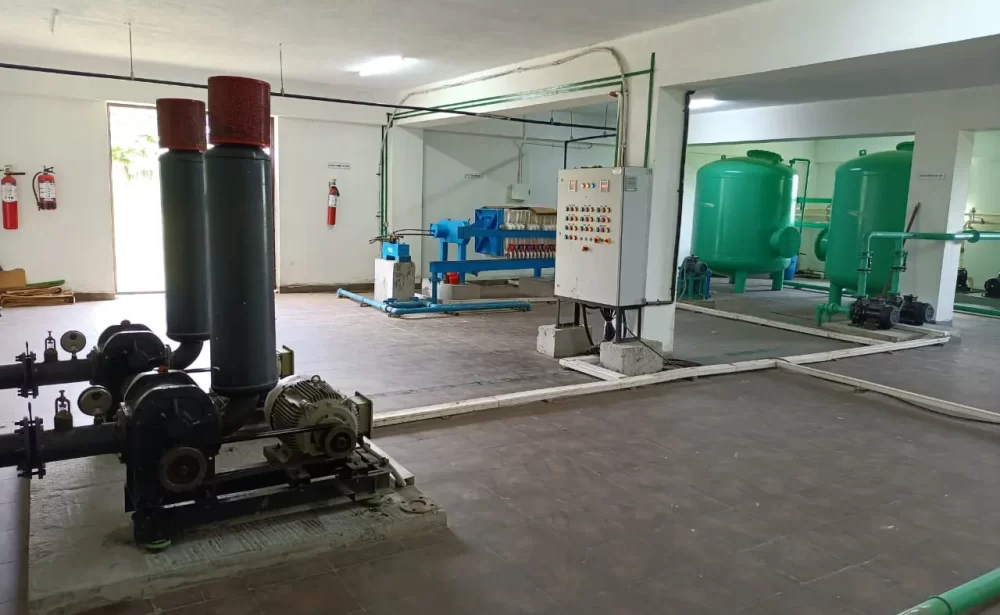
Sewage Treatment Plants (STP)
- SBR ( sequential batch reactor)
- MBBR ( Moving bed bio reactor)
- MBR (Membrane bio reactor)
- ASP (Activated sludge process)
Sequencing Batch Reactor (SBR) is an advanced technology that uses a fill and draws activated sludge system for wastewater treatment. It is best for treating both industrial and municipal wastes. The main difference between SBR technology and other STP technologies is that SBR uses a single batch reactor/single tank to process the equalization, aeration, and clarification compared to other technologies that use different batch reactors for various processes.
The MBBR system consists of an activated sludge aeration system where the sludge is collected on recycled plastic carriers. These carriers have an indoor large surface for optimal contact water, air and bacteria. The bacteria/activated sludge grow on the interior surface of the carriers. The bacteria break down the organic matter from the waste water. The aeration system keeps the carriers with activated sludge in motion. Only the additional amount of bacteria growth, the surplus sludge will come break away the carriers and can flow with the treated water towards the ultimate separator.
MBR technology system, the semi-permeable membranes, which are two-dimensional materials, (micro and ultrafiltration) are submerged in aerated biological reactors. This extent of filtration allows the superior quality of sewage to be drawn through the membranes. It also aids in the elimination of sedimentation and filtration processes that are commonly used for wastewater treatment.
The Activated Sludge Process (ASP) is a sewage treatment process in which air or oxygen is blown into raw, unsettled sewage to smash the solids and develop a biological 'soup' which digests the organic content and pollutants in the sewage. These plants do not have a primary settlement chamber which is the chamber that needs emptying by tanker on a regular basis with most three stage sewage treatment plants. In all activated sludge plants, once the sewage has been 'bubbled' long enough, excess sewage liquor is discharged into a clarification chamber where live bacteria settle to the bottom, dead bacteria rise to the top and form a crust with a clear liquid in the middle. This clean water is then discharged into either a watercourse or a soakaway.